Tuesday, November 2, 2021

Apple reportedly slashes iPad manufacturing to boost iPhone numbers

What you need to know

  • Apple has reportedly slashed iPad production by 50% to move capacity over to the iPhone lineup.
  • Apple is struggling as part of the worldwide chip shortage and appears to favor selling iPhones right now.

Bad news for iPad buyers, great news for iPhone fans.

Apple has reportedly slashed its iPad production numbers so that iPhones can be manufactured more quickly. If reports are accurate, Apple has told suppliers to reduce iPad capacity by as much as 50% to allow iPhones to be given priority.

The report, from Nikkei Asia, notes that iPhones and iPads have "a number of components in common." By moving those components from iPads to iPhones, Apple is able to get more smartphones into stores more quickly.

The same report also notes that older iPhones have seen their parts moved to iPhone 13 production lines.

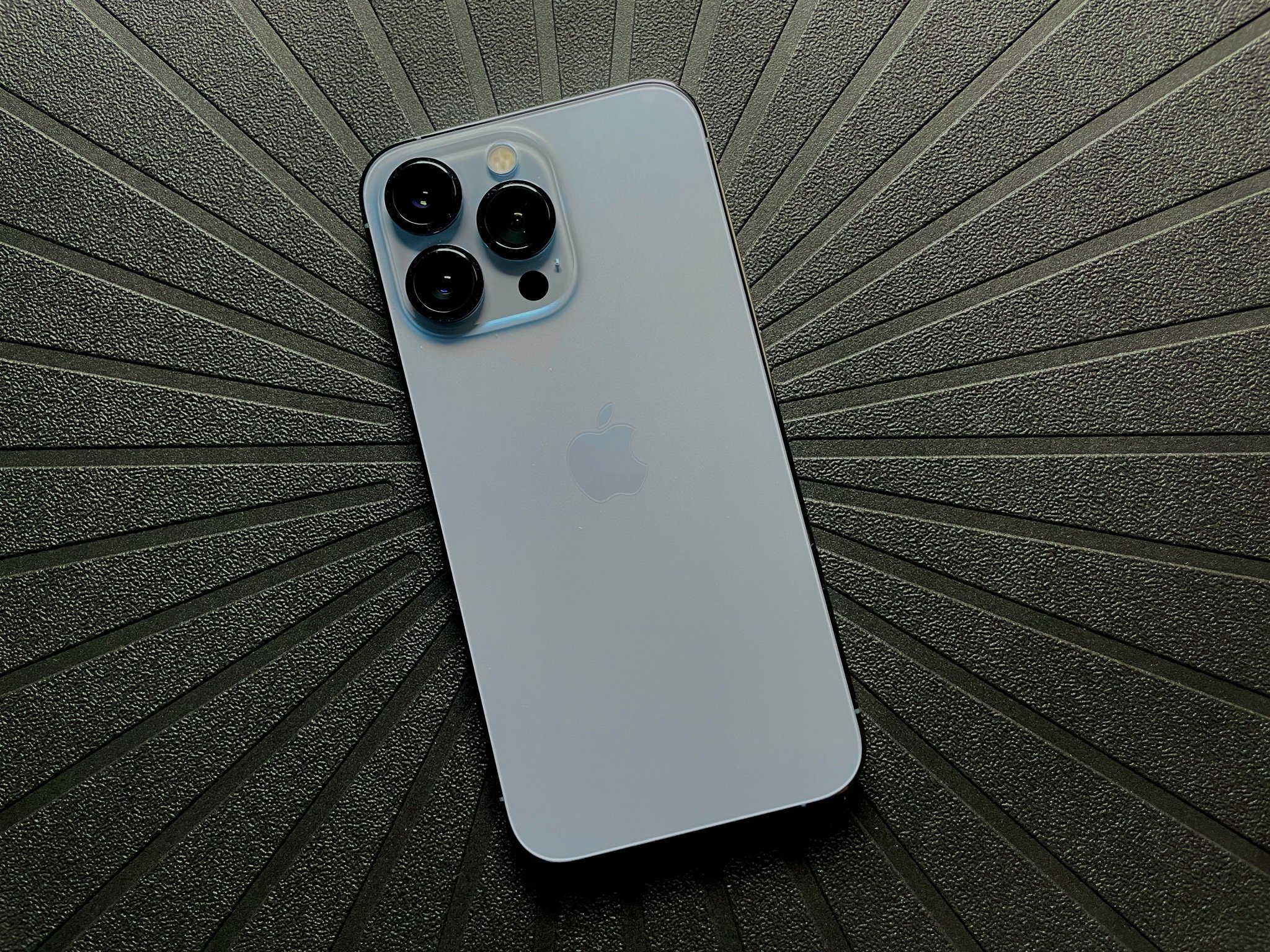
Apple has cut back sharply on iPad production to allocate more components to the iPhone 13, multiple sources told Nikkei Asia, a sign the global chip supply crunch is hitting the company even harder than it previously indicated.

Production of the iPad was down 50% from Apple's original plans for the past two months, sources briefed on the matter said, adding that parts intended for older iPhones were also being moved to the iPhone 13.

Demand for iPhone 13 remains strong and there are still considerable wait times associated with new orders. Apple also knows that peak demand for new iPhones comes within three months of release, giving it precious little time to capitalize on that demand. While iPhone 13 will be the best iPhone around for a year, demand will begin to wane eventually.

While this is obviously good news for someone planning an iPhone 13 order, it's less exciting for anyone who has an iPad in their future. With no indication of when we can expect the current semiconductor shortage to ease it isn't clear how long Apple and other companies will continue to juggle manufacturing capacity in these ways.


Apple reportedly slashes iPad manufacturing to boost iPhone numbers posted first on http://bestpricesmartphones.blogspot.com

LG offers its smart TV customers a free three-month Apple TV+ trial

What you need to know

  • LG is offering people a free three-month Apple TV+ trial.
  • People with 2016 and newer smart TVs can take advantage of the free offer.
  • The offer is only available to people who have not previously had a free Apple TV+ trial.

It has to be your first freebie, though.

LG is offering owners of 2016 and newer smart TVs the chance to take Apple TV+ for a spin for three months without paying a penny. The offer has to be your first, though — anyone who has previously enjoyed an Apple TV+ freebie is out of luck.

LG says that the offer is available to anyone who signs up between now and February 13, 2022, with the process of signing up as simple as following the on-screen instructions in the LG Content Store.

The TV maker was quick to point out that those who have 2018 or newer TV models will benefit the most thanks to its LG Magic Remote technology.

To add even more convenience to the viewing experience on 2018 and later models, LG Magic Remote makes navigating and content selection on Apple TV+ incredibly intuitive and easy. LG TV viewers can point, click and scroll with the motion sensitive controller or use voice commands with the built-in microphone to quickly search, discover and start watching great content on Apple's globally-popular streaming service.

Once the free trial ends users will pay the same $4.99 per month that everyone else pays and Apple will surely hope that the first taste of shows like Ted Lasso and Foundation is enough to get people coming back beyond those three free months.

If you want to enjoy Apple TV+ in style, be sure to check out our list of the best Apple TV deals on the market today. They're perfect for people who don't have the Apple TV app on their own smart TV, or just want to be able to watch Ted Lasso in the kitchen.

Exclusive content

Apple TV+

$5 per month at Apple

100% exclusive content for the price of a cup of coffee.

With TV+, you can watch well-produced, big-budget TV shows from famed directors, and starring award-winning actors and actresses across all your Apple devices and with up to six members of your Family Sharing group.


LG offers its smart TV customers a free three-month Apple TV+ trial posted first on http://bestpricesmartphones.blogspot.com

SoftBank-backed Indian logistics startup Delhivery files for $1 billion IPO

Indian logistics startup Delhivery seeks to raise about $998 million in its initial public offering, the startup said in a fling with the local regulator, joining a number of other tech startups in the world’s second largest internet market to explore the public markets.

The 10-year-old startup plans to issue new shares worth $669 million, while the rest of the capital will be utilized to buy existing shares, it said in a filing (PDF).

The startup, which was valued at over $3 billion four months ago, is hoping to list at a valuation of over $6 billion in the public market, Indian newspaper Economic Times reported earlier this week.

Backed by SoftBank, Tiger Global Management, Times Internet, The Carlyle Group, Steadview Capital, and Addition, Delhivery began its life as a food delivery firm, but has since shifted to a full suite of logistics services in over 2,300 Indian cities and more than 17,500 zip codes.

The Gurgaon-headquartered firm has raised $1.37 billion in funding over the years, according to data intelligence platform Tracxn. It reported loss of $56 million on a revenue of $514 million in the financial year that ended in March this year.

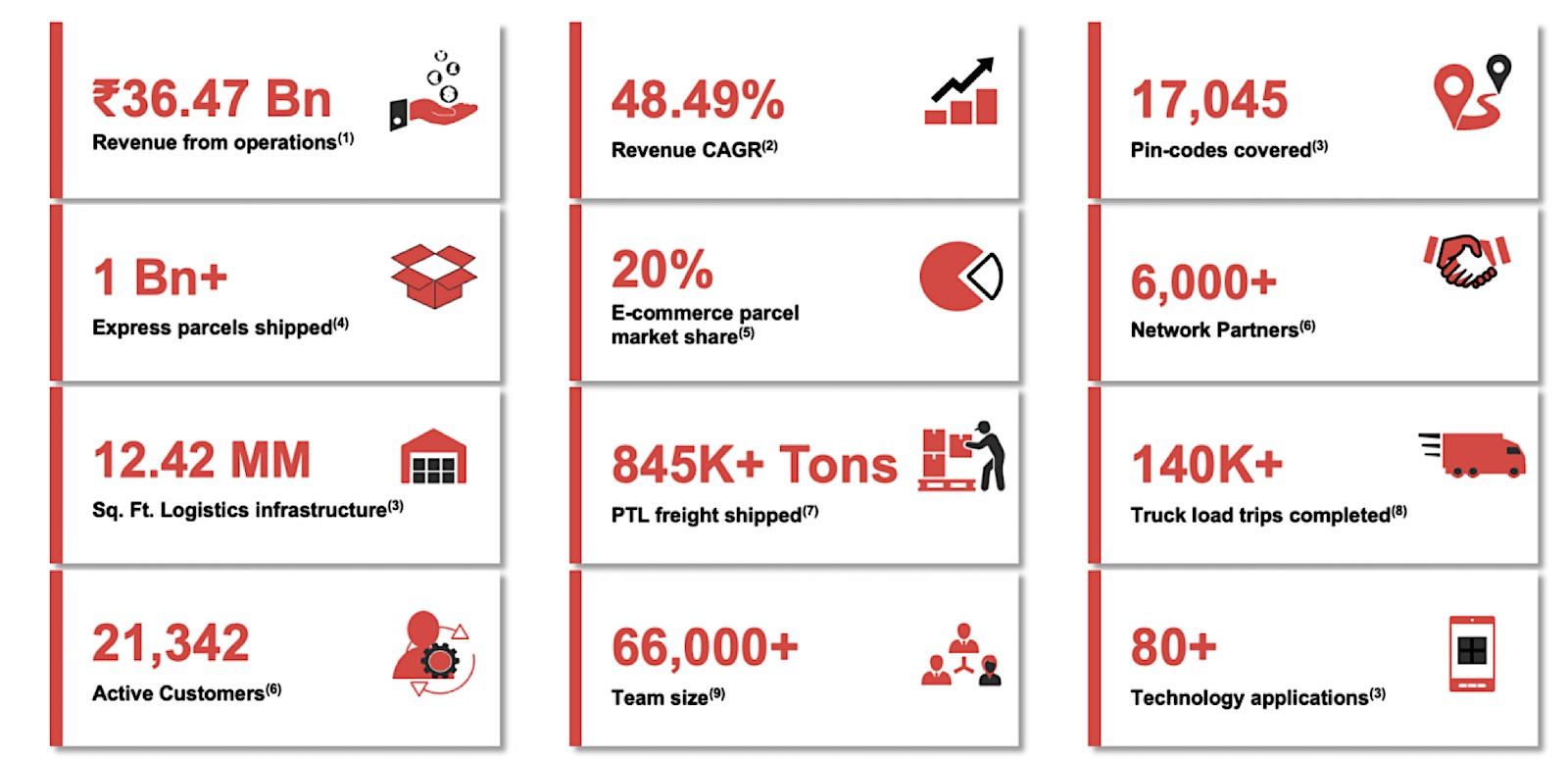
A look at Delhivery’s performance in fiscal year 2021. (Shared by Delhivery in the IPO filing.)

It is among a handful of startups attempting to digitize the demand and supply system of the logistics market through a freight exchange platform.

Its platform connects consigners, agents and truckers offering road transport solutions. The startup says the platform reduces the role of brokers, makes some of its assets such as trucking — the most popular transportation mode for Delhivery — more efficient, and ensures round the clock operations.

This digitization is crucial to address the inefficiencies in the Indian logistics industry that has long stunted the national economy. Poor planning and forecasting of supply and demand increases carrying costs, theft, damages and delays, analysts at Bernstein wrote in a report last month about India’s logistics market.

Delhivery, which says it has delivered over 1 billion orders, works with “all of India’s largest e-commerce companies and leading enterprises,” according to its website, where it also says the startup has worked with over 10,000 customers. For the last leg of the delivery, its couriers are assigned an area that never exceeds 2 square kilometers, allowing them to make several delivery runs a day to save time.

Indian logistics market’s TAM (total addressable market) is over $200 billion, Bernstein analysts wrote in a report to clients earlier this year. The startup said late last year that it was planning to invest over $40 million within two years to expand and increase its fleet size to meet the growing demand of orders as more people shop online amid the pandemic.


SoftBank-backed Indian logistics startup Delhivery files for $1 billion IPO posted first on http://bestpricesmartphones.blogspot.com

Korean autonomous driving startup 42dot bags $88.5M Series A to accelerate its growth

42dot, a South Korea-based autonomous Transportation-as-a-Service (TaaS) startup, announced today it has raised $88.5 million (104 billion WON) in a Series A round of funding to advance its urban mobility operating system (UMOS).

The Series A brings the startup’s total raised so far to $130.1 million. The company valuation is now estimated at $425 million (500 billion WON), a source familiar with the matter said. A spokesperson at 42dot declined to comment on the valuation. 

The latest funding included participation from new investors like Shinhan Financial Group, Lotte Rental, Lotte Ventures, STIC Ventures, We Ventures, DA Value Investment, and others. Returning backers also joined the Series A round, but the spokesperson did not provide their information. South Korea’s several big conglomerates, including Hyundai Motor, Kia Motors, LG Electronics, SK Telecom and CJ Logistics, invested in the company’s $42 million pre–Series A in September 2019.   

The Seoul-based company will use the proceeds to advance its AI-based technology, establish joint ventures and hire staff. It has 200 employees as of October, the spokesperson noted. The company also plans to expand its business through investment and M&A, based on its statement. In July, 42dot signed a memorandum of understanding (MOU) with South Korean financial firm Shinhan Capital to develop a mobility financial service.

42dot was founded in 2019 by CEO and co-founder Chang-Hyeon Song, who is also Head of TaaS team at Hyundai Motors. In April, the South Korea-based automaker set up a new TaaS division to strengthen its mobility strategies. 

The lidar-free self-driving company developed an autonomous driving software and hardware solution, AKit, which uses only two types of sensors such as cameras and imaging sensor radar to perform all aspects of sensing the environment surrounding the autonomous vehicle. 

42dot also built an autonomous mobility/logistics platform called “TAP!” that offers a raft of services across ride-hailing, fleet management, demand-responsive transport, smart logistics and more. 

The company’s two core solutions, Akit and TAP!, are expected to commercialize in 2023. Its clients will be primarily autonomous carmakers and mobility platform operators, the spokesperson said. 

“In the future, cities will be operated under a federated fully autonomous, self-managing, self-healing logistics and transportation infrastructure. The new infrastructure will provide a much more optical and cost-effective way to move people and goods,” Chang noted in its press kit. 


Korean autonomous driving startup 42dot bags $88.5M Series A to accelerate its growth posted first on http://bestpricesmartphones.blogspot.com

Chipper Cash gets $2B valuation with $150M extension round led by FTX

Chipper Cash, an African cross-border payments company, has raised $150 million in a Series C extension round led by Sam Bankman-Fried’s cryptocurrency exchange platform FTX.

The investment comes barely six months after Chipper Cash closed its first Series C round of $100 million, led by SVB Capital, the corporate venture capital arm of SVB Financial Group.

SVB Capital reinvested in this extension round and other existing investors such as Deciens Capital, Ribbit Capital, Bezos Expeditions, One Way Ventures and Tribe Capital.

While new investors also participated, they remain unnamed at the moment. The company’s total Series C stands at $250 million but its total funding to date is over $305 million.

During TechCrunch’s last conversation with CEO Ham Serunjogi, when the company announced its Series C round, he called Chipper Cash “the most valuable private startup in Africa” without specifics on the actual value.

The statement was left open for interpretation and several debates have sparked since then on whether Chipper Cash is a unicorn or not. Well, Serunjogi can confirm that Chipper Cash is indeed one now, as this extension round takes its valuation slightly above $2 billion.

Serunjogi founded Chipper Cash with Maijid Moujaled in 2018 to offer a no-fee peer-to-peer cross-border payment service in Africa via its app. Its services are used across seven African countries — Ghana, Uganda, Nigeria, Tanzania, Rwanda, South Africa and Kenya.

This year, the company began to make strides outside the continent. In May, it expanded to the U.K., allowing people to send money from the European nation to Chipper Cash’s African markets.

Chipper Cash

Image Credits: Chipper Cash

Last month, Chipper Cash, with over four million users, ventured into the already competitive U.S. to Africa corridor with established players such as Wise, MoneyGram, Sendwave and Remitly; the U.S. is responsible for almost 30% of the international remittances to sub-Saharan Africa.

Though the margins for remittances are small, the market has grown exponentially for the better part of the past decade, except last year when total remittances stood at $42 billion, down from $48 billion in 2020, per the World Bank.

Considering how expensive it is to send money to sub-Saharan Africa (it is the most expensive region to send money globally), Chipper Cash’s play is to offer the “best prices” and also facilitate money movement from Africa to the U.S.

“Chipper Cash is offering remittances considerably cheaper than anyone else,” Serunjogi told TechCrunch over a call. “More important to that is that we are now the first ones that I know honestly to be able to support Africa to the U.S. in terms of sending money.” 

Platforms such as WorldRemit already allow specific African countries like South Africa to send money to the U.S., so Chipper Cash is not entirely the first to try to offer such a service.

With that said, Serunjogi says peer-to-peer money movement from the U.S. to Nigeria and Uganda is currently live for users in those markets. The company will roll out the service to users in Ghana, South Africa and Kenya before the end of the year.

For outflow payment services — sending money from Africa to the U.S. — the CEO says that users in Uganda, South Africa and Kenya will be the first to get access next year.

Chipper Cash has also been busy tapping into the world of social payments. Earlier this year, Twitter launched its Tips feature, also known as Tip Jar, to allow creators to receive money on its platform. The social media company integrated with some payments platforms to make it accessible in different regions.

As creators in developed markets can select PayPal, Patreon, GoFundMe, Cash App and Venmo to receive tips, Chipper Cash was picked to offer the service to African creators through its payments link.

“The idea for Twitter and ourselves is to offer multiple ways for creators to be able to be paid for their work and their contribution online,” said Serunjogi.

“And Twitter worked with us on this given our presence as the largest cross-border payments platform in Africa that could support multiple countries for Africans using Twitter.”

Chipper Cash plans to make its Tip Jar integration accessible for users in the U.S. by next year, said Serunjogi.

The partnership with Twitter and cross-border expansion to the U.S. shows the growth opportunity for Chipper Cash and the funding from FTX only makes it more glaring. 

FTX is one of the largest cryptocurrency derivatives exchanges in the world. Last month, the company raised a $420 million round at a $25 billion valuation.

Sam Bankman-Fried runs the company and is also the co-founder of Alameda Research, a quantitative trading platform. Via FTX, he has invested in many businesses, including blockchain startups Sky Mavis and Circle and brokerage trading company DriveWealth (Chipper Cash recently partnered with DriveWealth to offer U.S. stocks to Ugandans).

Chipper Cash is FTX’s first investment in Africa and continues the plethora of signs pointing to serious crypto growth and recognition on the continent. This past year, crypto adoption in Africa grew more than 1,000% from peer-to-peer transaction volume totaling $105 billion, according to Chainalysis.

But Bankman-Fried maintains there is yet more room for adoption. “Despite the recent growth in Africa, moving money across the continent is still slow and expensive. Unsurprisingly it is the fastest growing market with grassroots crypto adoption,” he told TechCrunch.

The FTX boss added that FTX’s partnership with Chipper Cash is to “make money transfer as simple as a text message and accelerate the adoption of crypto within Africa and beyond.”

Given Bankman-Fried’s statement and Chipper Cash crypto tests in Uganda and South Africa, it is hard not to see the company using crypto to effect its peer-to-peer money movement within and outside the continent.

Another instance where the partnership proves beneficial is with Chipper Cash’s Network API. It fundamentally allows developers to leverage the company’s infrastructure to collect and disburse payments into Chipper wallets. In essence, Africans who use FTX will have the option to “Pay with Chipper Cash” on the crypto trading platform.

“That’s going to be a compelling use case for both of our companies as we keep scaling and as FTX keeps scaling their geographical coverage,” the CEO said. “They do some of the most innovative work in the crypto space, so working with them is going to be quite exciting.”

Serunjogi says the investment is a crucial repricing event for the company and gives it a strong balance sheet to continue scaling and “maintain our lead in the space.”

Closing back-to-back equity rounds in months, to an extent, has become the norm in markets like the U.S., Europe, India, and Latin America. However, it’s only just picking up speed in Africa.

Within the past year, startups like Nigerian open banking platform Mono, neobank Kuda and automotive tech company Autochek have raised successive rounds indicating investors’ huge appetite for African tech, especially fintech.

The sector remains the most funded on the continent. It has produced the most unicorns, with Chipper Cash — the most valuable startup on the continent alongside OPay — officially becoming the fourth this year after Flutterwave, OPay and Wave. It’s the fifth overall unicorn after tech talent company Andela reached the status in late September.

In general, however, the continent has six current unicorns, including Interswitch, a fintech giant that attained a billion-dollar valuation in 2019.


Chipper Cash gets $2B valuation with $150M extension round led by FTX posted first on http://bestpricesmartphones.blogspot.com
Thursday, October 28, 2021

Bionic hydroponic

You’ll have to forgive me, I’ve been thinking a lot about farming — specifically what it might look like in the future. This is largely due to the recent publication of my Bowery Farming TC-1. It’s a 12,000-word feature that really took me down the vertical-farming rabbit hole.

As I allude to in the piece, there are still plenty of question marks around the technology. At the top of the list are profitability and sustainability. And I fear that the former might come at the expense of the latter. What does seem certain, however, is that — if the category is going to survive and thrive — robotics and automation will need to play a major role.

“The automation and robotic component is a key part of [the] scalability equation, tied into the farm,” as Bowery CEO Irving Fain told me in one of our conversations. We sadly didn’t go super deep into the robotics aspect of things — a lot of this technology is still early and the company is hesitant to pull back the curtain as it looks to one-up competitors like AeroFarms.

Image Credits: Bryce Durbin/TechCrunch

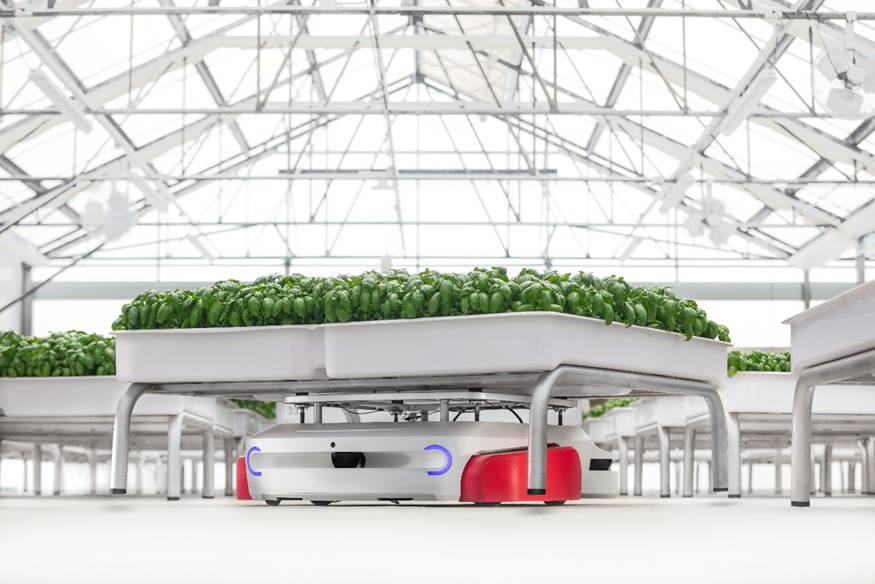
I was, however, able to glimpse one of the robots at their Kearny, New Jersey location, which is deployed to move produce trays from place to place. That’s a key part of the BoweryOS system, which — among other things — determines the optimal growing position for a given crop. Automation is also used in the harvesting process, which is performed on-site in order to reduce the steps between the farm and consumer.

Robotics make a lot of sense for these sorts of indoor farms. They’re much more well regimented than their more traditional counterparts. The Bowery location I visited, for instance, was erected in a building that formerly housed a fulfilment center. And in a sense, creating automation for one isn’t entirely dissimilar than for a warehouse. Conditions like lighting are easily controlled and, for the most part, the primary goal is getting a payload from point A to point B.

Don’t forget to sign up to get the upcoming free newsletter version of Actuator delivered to your inbox.

Image Credits: Iron Ox

Iron Ox is probably the best example of a robotics company taking on indoor farming. In fact, the company is working on fully automated indoor growing solutions. But fundamentally transforming agtech is going to take more than just the indoor and vertical forms that only represent a sliver of the overall puzzle. Something I learned researching that piece. The average age of a farmer in Japan is 67. The average farmer in the U.S. is only about 10 years younger.

Add to that a crisis filling seasonal jobs and it becomes clear why so many companies think the answer to these problems is automation. That’s obviously a more complicated task, but there are a number of companies looking to tackle it, from startups like Burro to big conglomerates like John Deere, which has acquired a number of robotics firms.

Fabric

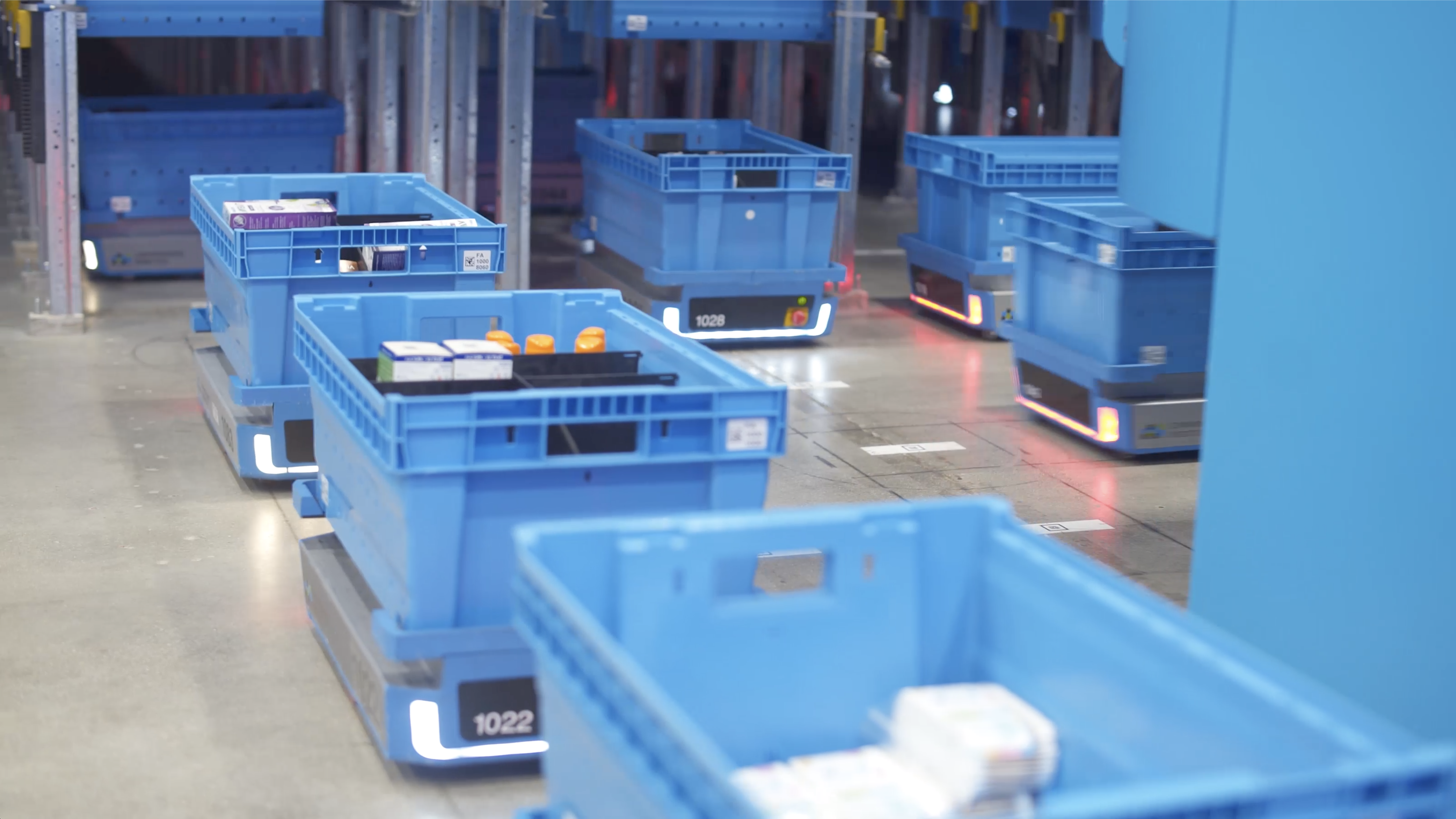
Fabric’s automated fulfillment center. Image Credits: Fabric

More on that soon, probably. For now, though, we need to talk about Fabric’s massive raise. The company already has contracts with some massive names, including Walmart, Instacart and FreshDirect. They’re all looking for the same thing: something that will make them more competitive with Amazon. That’s a tall order, given the retail giant’s utter dominance of everything it touches. That includes automation, of course, with Amazon robotics dating back to 2012.

“As it is, we already have more demand than we can serve,” Fabric’s CEO notes. “At the same time, we are seeing bigger opportunities beyond the proposition beyond our micro-fulfilment centers, how they interact in the network and the supply chain.”

I believe it. COVID has accelerate so much of what was already on an upward trajectory. And even as things return to a semblance of normal, I don’t see that demand waning. This latest $200 million round pushes Fabric’s valuation north of unicorn status.

Image Credits: Gitai

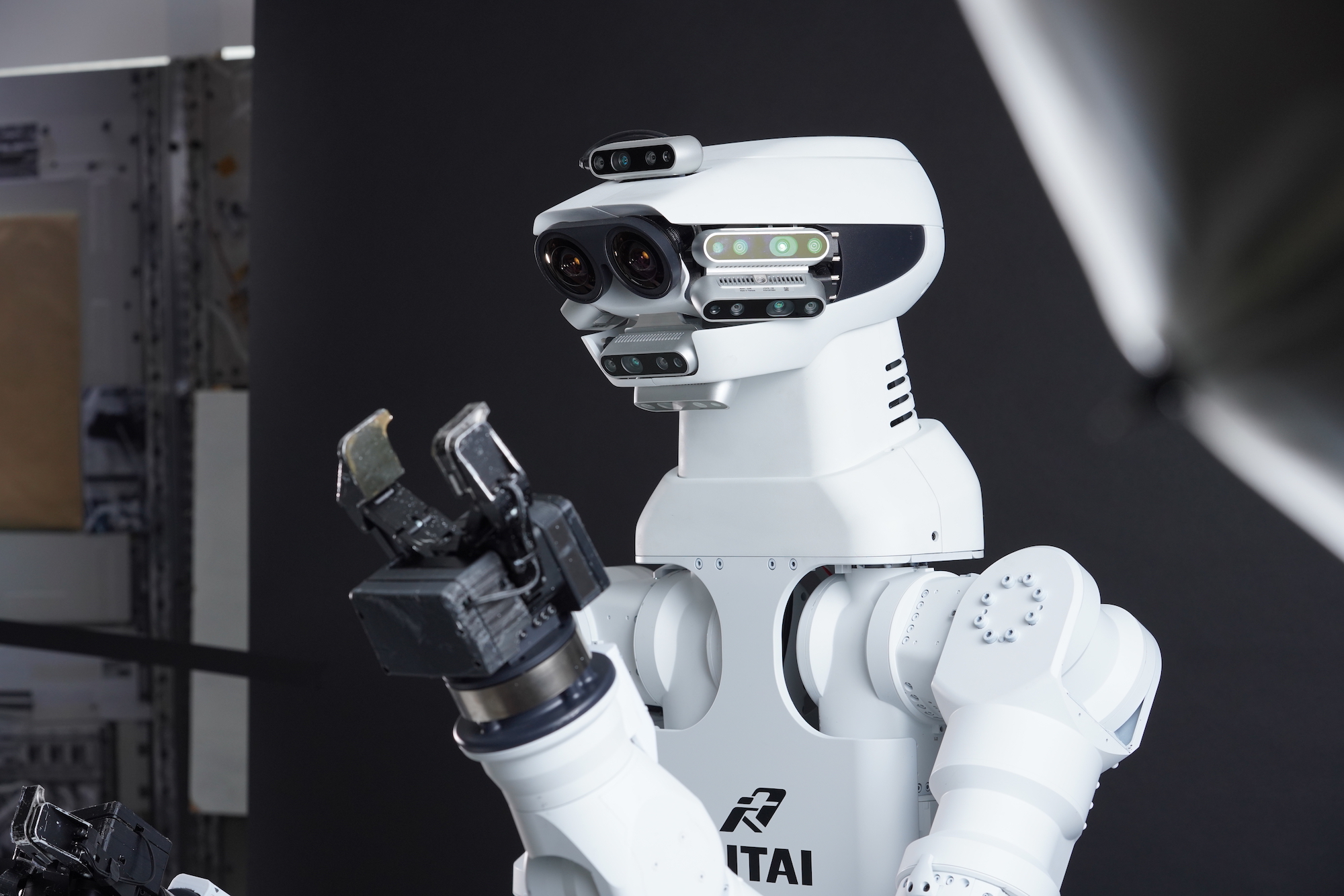
A bit of space robot news to wind things down this week. The International Space Station got a preview of Gitai Japan’s S1 robotic arm this week. The autonomous appendage is designed to perform maintenance tasks, including operating switches and assembling structures. It puts it well on its way to potential deployment, having hit seven of nine (not a Star Trek reference, I swear) TRL (not a 90s MTV reference, I swear) or technology readiness levels.

“The success of this investigation proves that the GITAI robot can be a solution for space agencies and commercial space companies looking for versatile, dexterous, relatively safe (less exposure to life threatening risks for humans), and inexpensive labor force,” NASA said in a statement. “Providing this option furthers the goals of commercialization of space.”


Bionic hydroponic posted first on http://bestpricesmartphones.blogspot.com

NeuraLight emerges from stealth with $5.5M to digitize neurological evaluation and care

NeuraLight has launched from stealth with $5.5 million in seed funding to apply AI to advance drug development for neurological disorders. The company was co-founded by Micha Breakstone, the co-founder and former president of Chorus.ai, which sold to ZoomInfo for $575 million earlier this year. Breakstone now leads NeuraLight as the company’s CEO alongside co-founder and CTO Edmund Ben-Ami.

The seed funding round included participation from MSAD, Kli, Tuesday, Operator Partners, and VSC Ventures. Angel investors include Trax Retail’s CEO Tamara Minick-Scokalo, Instacart CEO Fidji Simo, Clover Health CEO Vivek Garipalli, and Noam Soloman, the CEO of Immunai.

NeuraLight, which has dual headquarters in Austin and Tel Aviv, aims to help people suffering from neurological disorders by digitizing neurological evaluation and care. Breakstone and Ben-Ami have recruited talent from the research and pharmaceutical industries, along with alumni from Google, Chorus.ai and Viz.ai.


The team has built a platform that automatically extracts microscopic eye movement measurements that serve as reliable digital endpoints for neurological disorders. The platform is able to remove light and movement from videos using AI and machine learning to get a more precise video.

“We’re able to extract ocular metrics from this highly augmented precise video to predict the progression of neurological disorders from microscopic movements. Then we’re able to sell that to pharma companies as a means to develop drugs in a better way for neurology,” said Breakstone in an interview with TechCrunch.

The platform is ultimately meant to help accelerate clinical trials and increase the probability of success of future therapies for Parkinson’s, Alzheimer’s, Multiple Sclerosis, and other neurodegenerative diseases.

Given that the platform doesn’t require a dedicated device, Breakstone says pharmaceutical companies will be able to integrate NeuraLight into clinical trials and in remote settings. By gathering de-identified data from thousands of patients, NeuraLight aims to build the largest, proprietary, de-identified oculometric database and apply AI to gain insights from the data.

Image Credits: NeuraLight

Breakstone says there aren’t many competitors within that space and that those that do exist require dedicated devices, such as camera eye-trackers and pupilometers. He notes that what sets NeuraLight apart from these companies is that its platform only relies on video from a standard smartphone or webcam. The company has submitted a provisional patent to protect the technology that it’s developing.

NeuraLight notes that more than 1 billion people worldwide suffer from neurological disorders and that current neurological evaluation is highly subjective and depends on a manual examination of symptoms, which is why pharmaceutical companies haven’t had effective tools to develop precise therapies.

“Having worked in the pharmaceutical industry for the last two decades, I can confidently say that digital endpoints are the future of neurology,” said Rivka Kretiman, the chief innovation officer at NeuraLight, in a statement. “This technology has been the missing piece pharma has needed to make drug development for neurological diseases effective and ultimately more successful, and will create a new standard of measurement for these companies’ drug development pipelines.”

As for the $5.5 million in seed funding, NeuraLight is looking to partner with pharma companies to help them increase the success rate in developing new drugs and reduce development costs. The company also aims to help pharma companies shorten the time it takes for drugs to reach the market. Breakstone says NeuraLight has started its own measurements in Israel for Parkinson’s disease and is in the process of working with three pharma companies, the names of which have not yet been disclosed.

“We want to transform neurology entirely and allow the new generation of drugs to be developed. We made sure to hire and bring on people that actually care about transforming the world and want to help us build an iconic company that will transform the way neurological care assessment is done today,” Breakstone said.

NeuraLight’s scientific advisory board will be led by Ruth Djaldetti, the head of the movement disorder center at the Rabin Medical Center in Israel. Further, Nobel Prize winner Alvin Roth, ex-Flatiron Health’s CTO Gil Shklarski and Pomelo Care CEO Marta Bralic Kerns will advise the company’s scientific vision as members of the board.


NeuraLight emerges from stealth with $5.5M to digitize neurological evaluation and care posted first on http://bestpricesmartphones.blogspot.com